
Countertops Built for Coastal New England Kitchens
Granite countertop fabrication and installation in Portsmouth for homes exposed to coastal humidity, salt air, and freeze-thaw stress
Renaissance Stone is renowned for its meticulous fabrication and installation of premium granite countertops, expertly crafted for kitchens and baths in the stunning Seacoast region of New Hampshire. Recognizing the unique challenges of coastal living, our countertops are designed for exceptional durability and outstanding performance, even amidst the harsh conditions of the area. Homeowners need surfaces resilient enough to withstand the combined effects of high humidity, corrosive salt air, and the freeze-thaw cycles typical of coastal winters. When properly fabricated and sealed, granite becomes an invaluable asset for homes, offering strength where softer or less durable materials may succumb prematurely.
The granite fabrication process is thorough and precise, involving accurate cutting of slabs to exact dimensions, expertly applied edge profiles, and careful cutouts for sinks and fixtures before the stone leaves our specialized shop. After fabrication, each granite slab is sealed to protect against moisture infiltration and staining, ensuring a lasting finish. Additionally, our installations feature structural supports designed to resist cracking under weight, further enhancing the durability of the countertops. This meticulous work is performed in-house at our Portsmouth fabrication shop, allowing us to uphold rigorous quality control standards without reliance on third-party facilities, ensuring every project meets our elevated expectations.
We invite you to explore your options further by scheduling a comprehensive property consultation. During this meeting, we will examine various slab selections and edge profiles tailored to your specific kitchen design, assisting you in crafting the ideal countertop solution for your home.
What In-House Fabrication Controls
Local fabrication means every cut, edge profile, and seam placement decision happens under one roof with direct oversight. You work with the fabricators who execute the slab cuts, not a sales team that hands specifications off to an unknown subcontractor. When modifications are needed or measurements require field verification, the response time is measured in hours instead of days because the shop operates locally and the fabricators know the project details firsthand.
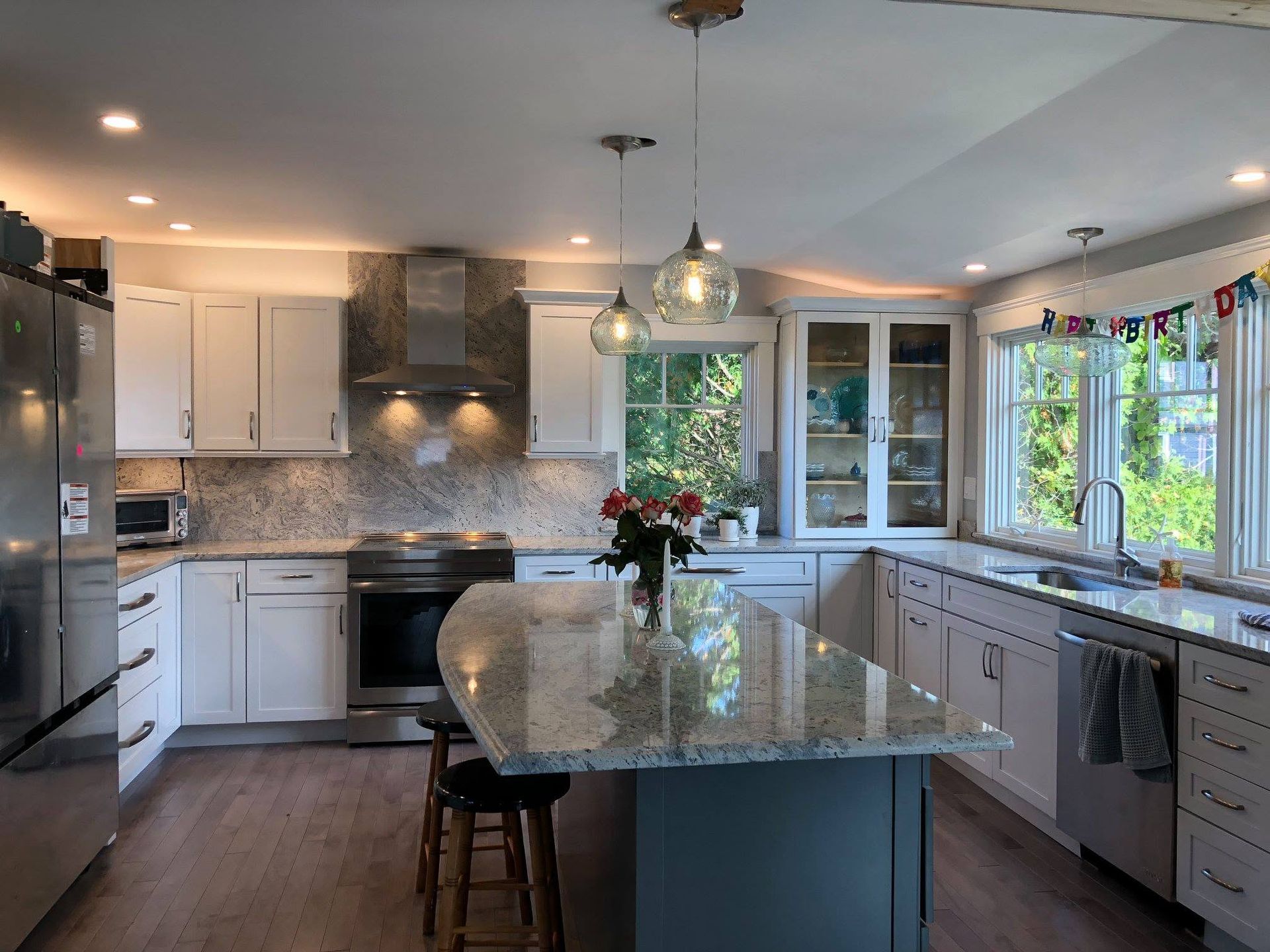
After installation, you notice granite surfaces that sit level without lippage at seams, edges that match the profile you selected during planning, and cutouts that align precisely with plumbing fixtures. Renaissance Stone completes fabrication and installation as a continuous process, which eliminates the coordination failures that occur when different companies handle material preparation and field installation. The granite resists etching from acidic foods, tolerates hot cookware without scorching, and maintains its polished finish through daily kitchen use.
Edge profiles are executed to specification because the same fabricators who review your layout are the ones operating the tooling. Seam placement on larger installations is planned around visual sightlines and structural load points rather than defaulting to the easiest cut pattern. When granite arrives at your property, it has been test-fitted in the shop to confirm dimensional accuracy before the installation crew loads the truck.
Questions Homeowners Ask Before Selecting Granite
Granite remains a popular choice for Seacoast homeowners who want proven durability without ongoing maintenance demands. These questions come up during slab selection and project planning.
How does granite perform in coastal New Hampshire conditions?
Granite tolerates the humidity and salt air common along the Seacoast without degrading, and its density prevents moisture infiltration that damages porous stone. Properly sealed granite resists freeze-thaw damage during winter months when temperature swings stress weaker materials.
What edge profiles work best for kitchen countertops?
Edge selection depends on cabinet style and how much overhang the design requires, with options ranging from simple eased edges to decorative ogee profiles. Renaissance Stone fabricates edge profiles in-house, so you see exactly what the finished edge looks like before installation.
How is granite sealed after fabrication?
Sealer is applied after the slab is cut and polished, penetrating the stone to block moisture and staining agents from entering the porous structure. The sealer does not sit on the surface as a coating; it absorbs into the granite and cures to form a protective barrier within the stone itself.
What happens if measurements change after templating?
Field verification allows fabricators to adjust cuts before final installation if cabinet positioning shifts or plumbing locations move. In-house fabrication means those adjustments happen locally without shipping delays or third-party coordination.
Why does seam placement matter on granite countertops?
Seams on granite are visible, so placement decisions affect both structural integrity and visual appearance. Seams positioned along natural sightlines or near sinks are less noticeable than seams placed arbitrarily across open counter spans.
Renaissance Stone operates a locally owned stone fabrication shop in Portsmouth, serving the full Seacoast region with granite countertops fabricated on-site and installed by the same team that cuts the slabs. Request a slab selection appointment to review material options and discuss edge profiles for your kitchen or bath project.