
Natural Stone Harder Than Most Granite
Quartzite countertop fabrication in Portsmouth for Seacoast homes where heat exposure, moisture, and heavy daily use require maximum hardness
Quartzite outperforms softer natural stones in kitchens where heat, moisture, and impact stress converge daily. Renaissance Stone fabricates and installs true quartzite for Seacoast New Hampshire properties where durability requirements exceed what marble or softer stones can deliver. Your countertops need to handle hot cookware, resist etching from acidic spills, and maintain structural integrity under the coastal humidity that accelerates wear on porous materials.
Quartzite forms when sandstone undergoes metamorphic pressure, creating a stone harder than most granite with natural veining that resembles marble. The material's density prevents moisture infiltration and resists scratching, chipping, and heat damage that compromise softer stones. Proper material verification at selection is critical because marble and dolomite are frequently mislabeled as quartzite at slab yards, and the performance difference becomes apparent only after installation when the softer stone begins etching and staining.
Arrange a slab review to verify quartzite hardness and vein structure before fabrication begins.
Why Material Identification Protects Your Investment
True quartzite can be verified through hardness testing and vein analysis that distinguish it from marble or dolomite sold under the same name. A steel blade scratches marble easily but barely marks quartzite, and the vein patterns differ visibly when you know what structural characteristics to examine. Renaissance Stone verifies material identity before fabrication to prevent the buyer regret that follows when a softer stone fails to perform as expected in a high-use kitchen.
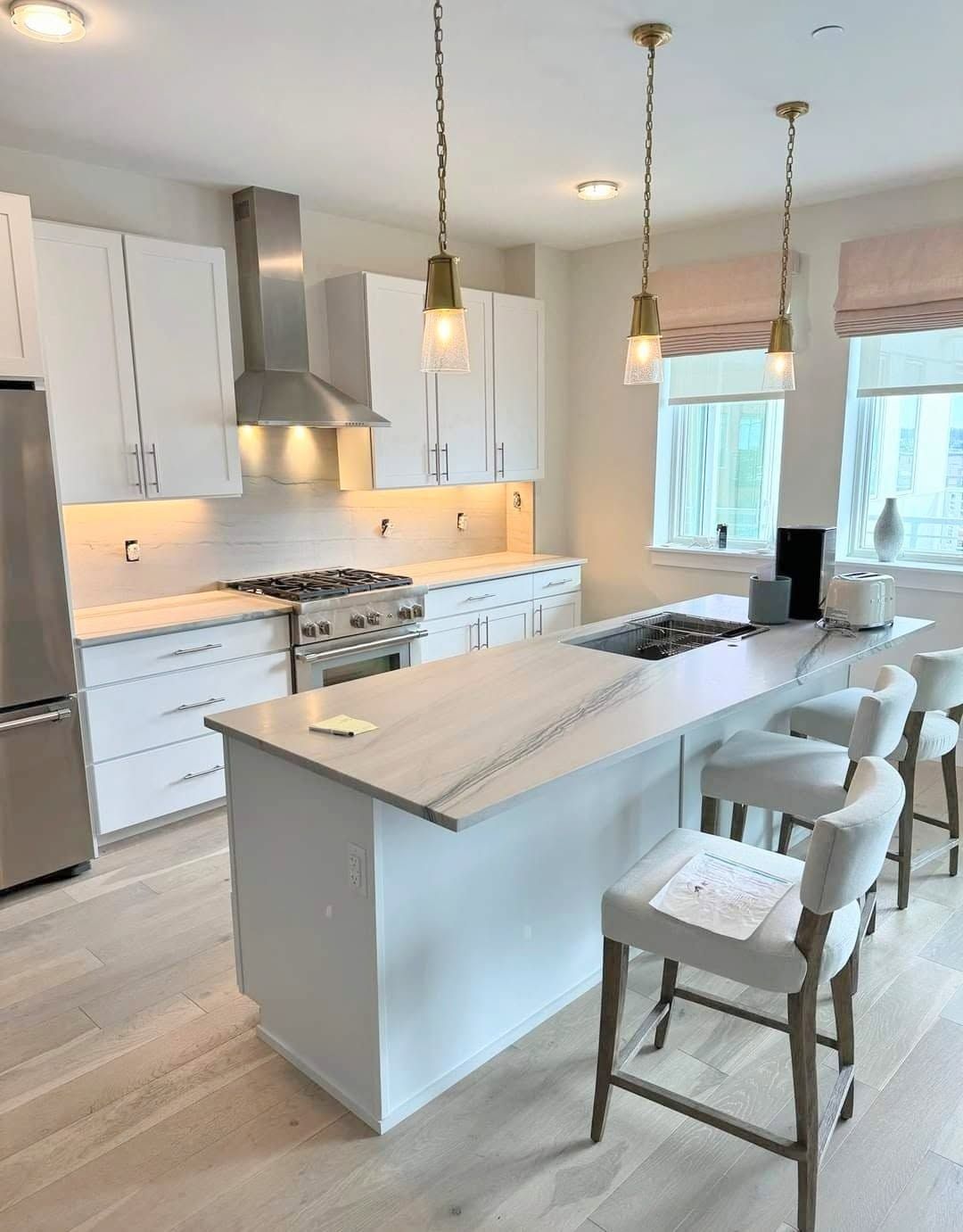
Once installed, you notice quartzite surfaces that resist heat without scorching, tolerate knife contact without visible scratching, and shed acidic spills without etching. The stone maintains its polished finish through years of kitchen use because its hardness prevents the surface degradation that dulls softer materials. Seams are placed to follow natural vein lines where possible, making transitions less visually disruptive across large counter spans.
Quartzite does require sealing like other natural stone, but the frequency is lower than granite due to the material's lower porosity. The stone's natural hardness also means edge profiles hold their shape without chipping, and cutouts for sinks and cooktops can be executed with tighter tolerances because the material resists cracking under stress.
What Seacoast Homeowners Ask About Quartzite
Quartzite is less common than granite or quartz, so questions about material performance and selection come up frequently during project planning.
How do you verify that a slab is true quartzite and not marble?
True quartzite resists scratching from a steel blade and shows a granular structure under magnification, while marble scratches easily and displays calcite crystals. Vein patterns also differ, with quartzite showing linear striations from metamorphic pressure rather than the swirling patterns typical of marble.
What makes quartzite harder than granite?
Quartzite forms under higher metamorphic pressure than granite, creating a denser crystalline structure that resists abrasion and impact. The material ranks higher on the Mohs hardness scale, making it one of the most durable natural stone options for countertops.
Does quartzite handle coastal New Hampshire humidity without problems?
Quartzite's low porosity prevents moisture infiltration that damages softer stones, and proper sealing at installation blocks the humidity and salt air exposure common in Portsmouth and surrounding coastal areas. The stone tolerates freeze-thaw cycles without cracking when fabricated and installed correctly.
Why does quartzite cost more than granite?
Quartzite slabs are rarer and harder to quarry than granite, and the material's hardness increases fabrication difficulty and tool wear. The cost reflects both material scarcity and the specialized equipment required to cut and polish the stone.
How often does quartzite need resealing?
Sealing frequency depends on porosity, but most quartzite requires resealing every one to two years compared to granite's annual sealing schedule. A simple water test shows when resealing is needed: if water beads on the surface, the sealer is still effective; if water soaks in, resealing is due.
Renaissance Stone operates as a locally based stone fabrication shop serving the Seacoast region, with expertise in natural stone identification and selection that protects your investment from material misrepresentation. Schedule a consultation to review quartzite options and discuss hardness verification for your kitchen or bath project.