
Non-Porous Stone for Coastal Kitchens
Soapstone countertop fabrication in Portsmouth for damp coastal kitchens and period-appropriate Seacoast home restorations where patina development defines the material's character
Soapstone's non-porous structure makes it naturally resistant to moisture infiltration, a functional advantage in damp coastal kitchens where other natural stones absorb humidity and develop staining over time. Renaissance Stone fabricates and installs soapstone countertops for Seacoast New Hampshire homes where the material's character matches historic architectural details, particularly in Strawbery Banke and South End properties where soapstone provides period-appropriate kitchen surfaces. The stone darkens as mineral oil treatment develops patina, and understanding this transformation prevents the dissatisfaction that occurs when homeowners expect soapstone to maintain its original light gray appearance permanently.
Soapstone forms from metamorphosed talc, creating a soft, dense stone that resists acids, tolerates heat, and requires no sealing because its structure contains no pores for liquids to penetrate. The material scratches more easily than granite or quartzite due to its softness, but those scratches can be sanded out with fine abrasives and mineral oil application that blends repairs into the surrounding surface. Fabrication involves precise edge profiling and cutouts because soapstone chips easily if edges are cut too thin or handled roughly during installation.
Arrange a material consultation to review soapstone samples at different patina stages before selecting slabs for your kitchen or bath.
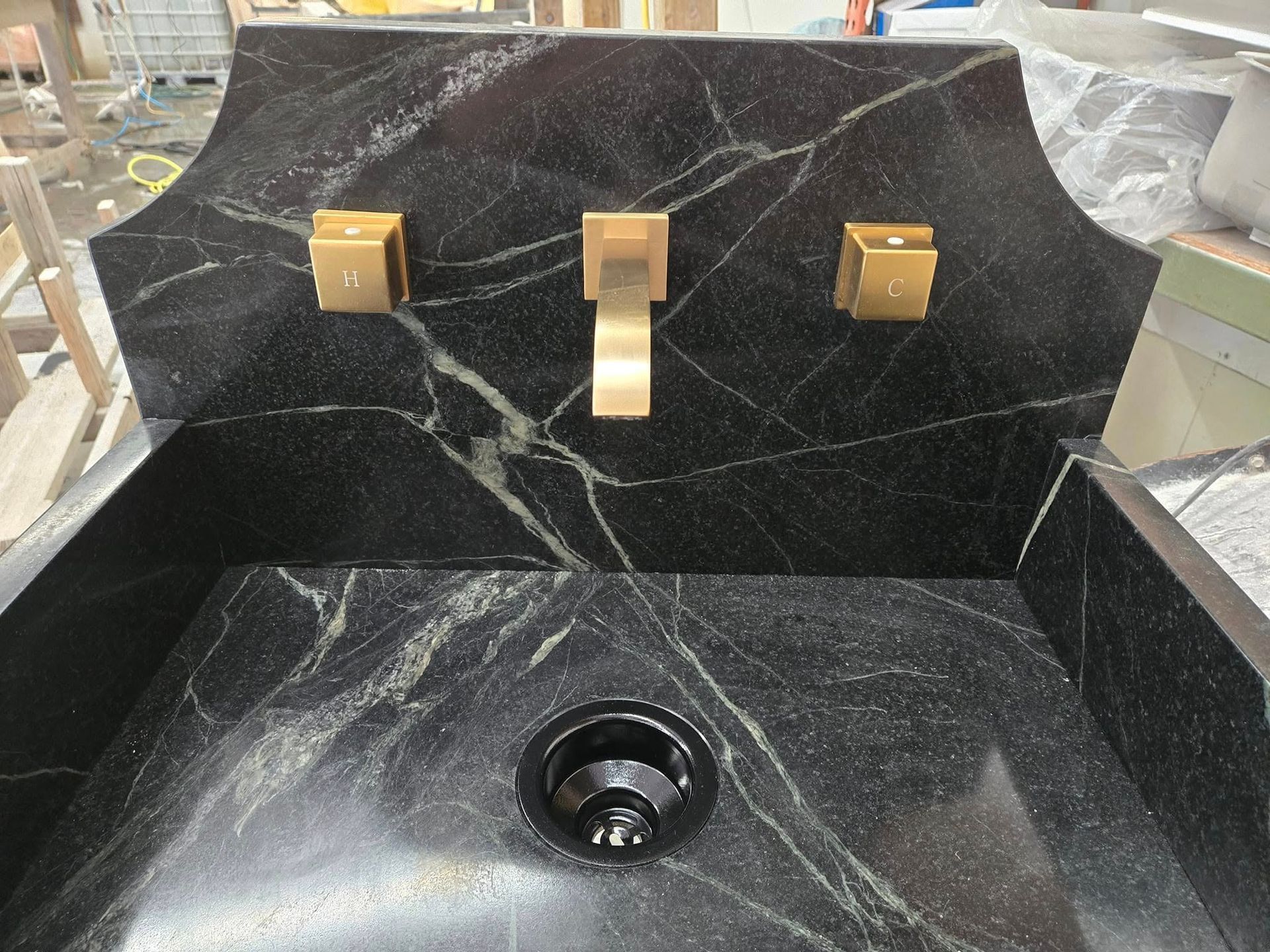
What Patina Development Means for Soapstone
Soapstone arrives from the fabrication shop in a light gray color that darkens over time as oils from hands, food, and applied mineral oil treatments penetrate the surface and oxidize. You can accelerate this darkening through regular mineral oil application or allow natural patina to develop slowly through kitchen use, but the stone will darken regardless of treatment. The patina is not surface coating but a chemical change in the stone itself, which means it cannot be removed or reversed once developed.
After installation, you notice soapstone surfaces that resist staining from wine, coffee, and acidic foods without sealing, tolerate hot cookware placed directly on the stone, and develop a rich charcoal patina as the material ages. The stone feels slightly softer to the touch than granite and shows scratches from knives or abrasive contact, but those marks blend into the patina and can be sanded smooth if they become visually disruptive. Because soapstone requires no sealing, maintenance involves only cleaning with mild soap and optional mineral oil application to accelerate or even out patina development.
Soapstone suits homeowners who want natural stone character without sealing maintenance and accept the material's softness as part of its appeal. The stone works well in historic home restorations where period accuracy matters, and its non-porous nature makes it functional in coastal kitchens where humidity challenges porous materials.
Common Questions About Soapstone Countertops
Soapstone is less common than granite or quartz in modern kitchens, so homeowners often need guidance on material characteristics and maintenance before committing to the stone.
Why does soapstone darken over time and can it be prevented?
Darkening occurs as oils oxidize within the stone's structure, a natural chemical process that cannot be prevented. You can control the rate by applying mineral oil regularly or allowing natural patina to develop slowly, but the stone will eventually darken to charcoal gray regardless of treatment.
How do you repair scratches on soapstone countertops?
Light scratches can be sanded out using fine-grit sandpaper or abrasive pads, then blended by applying mineral oil to the affected area. The patina development hides most scratches naturally as the stone darkens.
Does soapstone work for Portsmouth kitchens exposed to coastal humidity?
Soapstone's non-porous structure prevents moisture infiltration that damages granite, marble, and other porous stones in coastal environments. The material requires no sealing and resists the humidity and salt air common in Portsmouth and surrounding Seacoast areas.
What makes soapstone appropriate for historic New England homes?
Soapstone was commonly used in 18th and 19th century New England kitchens due to its availability in regional quarries and resistance to heat and acids. The material provides period-appropriate character in Strawbery Banke and South End historic property restorations.
How often does soapstone need mineral oil treatment?
Oil treatment is optional and depends on how quickly you want the patina to darken. Weekly applications accelerate darkening, while monthly or occasional treatments allow natural patina to develop more slowly. The stone does not require oil for protection, only for aesthetic control.
Renaissance Stone operates as Portsmouth-based stone fabricators with expertise in historic material matching for Seacoast properties, including soapstone selection and patina guidance that sets realistic expectations before fabrication begins. Schedule a consultation to review soapstone options and discuss patina development for your kitchen or historic home restoration project.